Common Residential Masonry Problems and How to Address Them
Brick homes are known for strength and long-term value, but their masonry still needs occasional maintenance. Mortar joints wear down, porches settle, bricks crack, and water can enter small openings that may not look serious at first.
For homeowners in Metro Detroit and Southeast Michigan, identifying masonry damage early can help protect the home, improve curb appeal, and reduce the need for larger repairs.
Crumbling Mortar Between Bricks
Mortar is often the first part of a brick wall to show wear. It is designed to absorb some of the stress caused by weather and movement, which means it may deteriorate before the brick itself.
Crumbling or recessed mortar creates gaps where water can enter. Tuckpointing replaces the damaged mortar and helps restore stability without rebuilding the entire wall.
Homeowners may need tuckpointing around:
- Exterior brick walls
- Chimneys
- Porches and steps
- Garage walls
- Entryways
- Brick columns
Cracked or Loose Bricks
A single damaged brick may seem minor, but it can allow moisture to move deeper into the wall. Brick cracks may result from impact, settling, water absorption, or pressure from failing mortar joints.
Loose or broken bricks should be evaluated before surrounding masonry is affected. Individual brick replacement can often restore the area while preserving the rest of the structure.
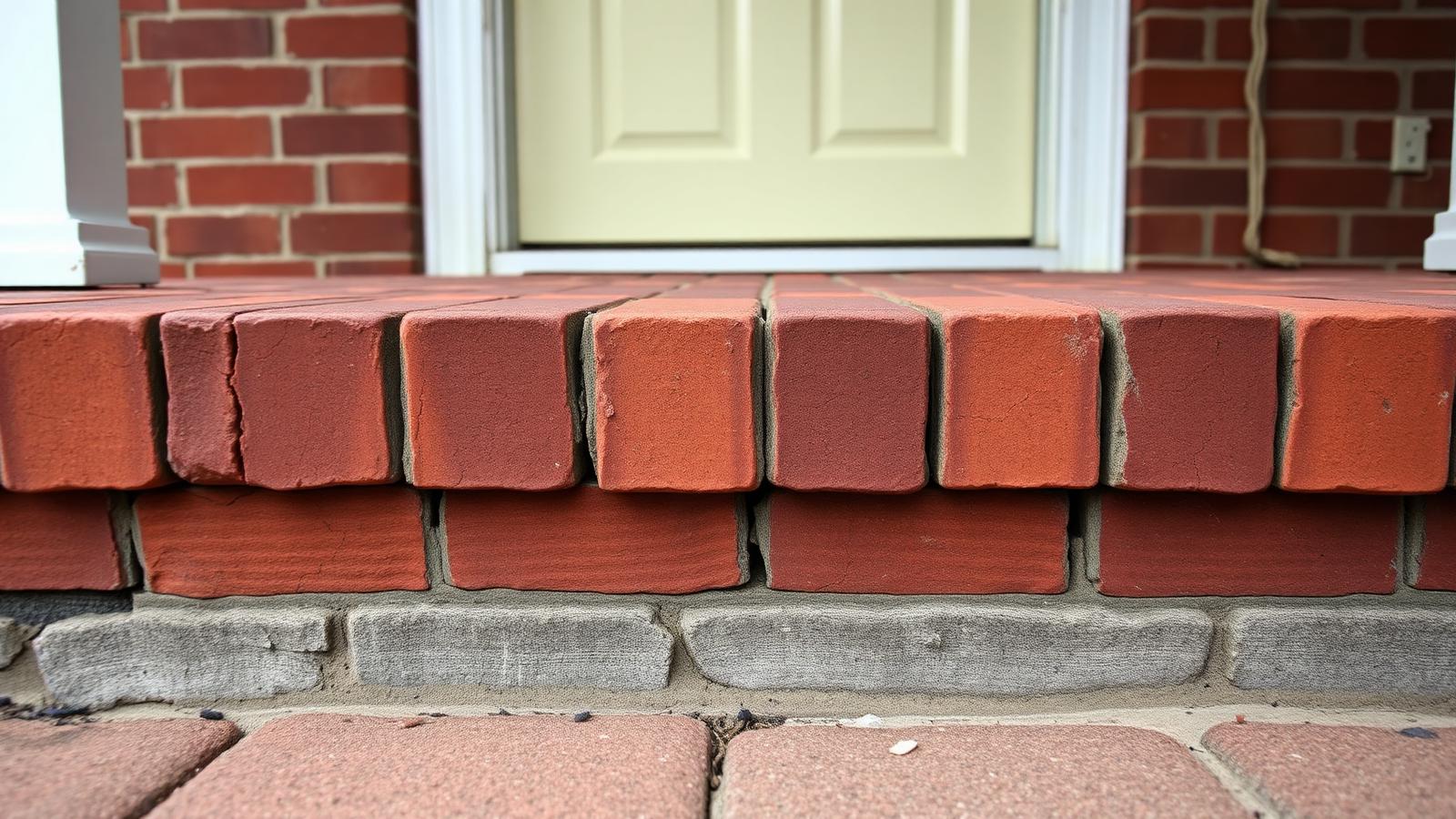
Settling Brick Porches and Steps
Porches and entry steps experience regular foot traffic and constant exposure to weather. Soil movement, drainage problems, and moisture beneath the structure can cause steps to settle or bricks to separate.
Signs of porch damage include:
- Uneven or sinking steps
- Gaps between the porch and the house
- Loose bricks along the edges
- Cracked mortar joints
- Water collecting near the foundation
- Railings that feel unstable
A professional masonry contractor can determine whether the porch needs tuckpointing, brick replacement, structural reinforcement, or partial rebuilding.
Water Damage and Efflorescence
White powdery marks on brick are known as efflorescence. They appear when moisture moves through masonry and leaves mineral deposits behind as it evaporates.
Efflorescence does not always mean the brick is structurally damaged, but it can indicate an ongoing moisture issue. Drainage, damaged mortar, leaking gutters, and unsealed openings should be checked before cleaning the surface.
Aging Chimneys
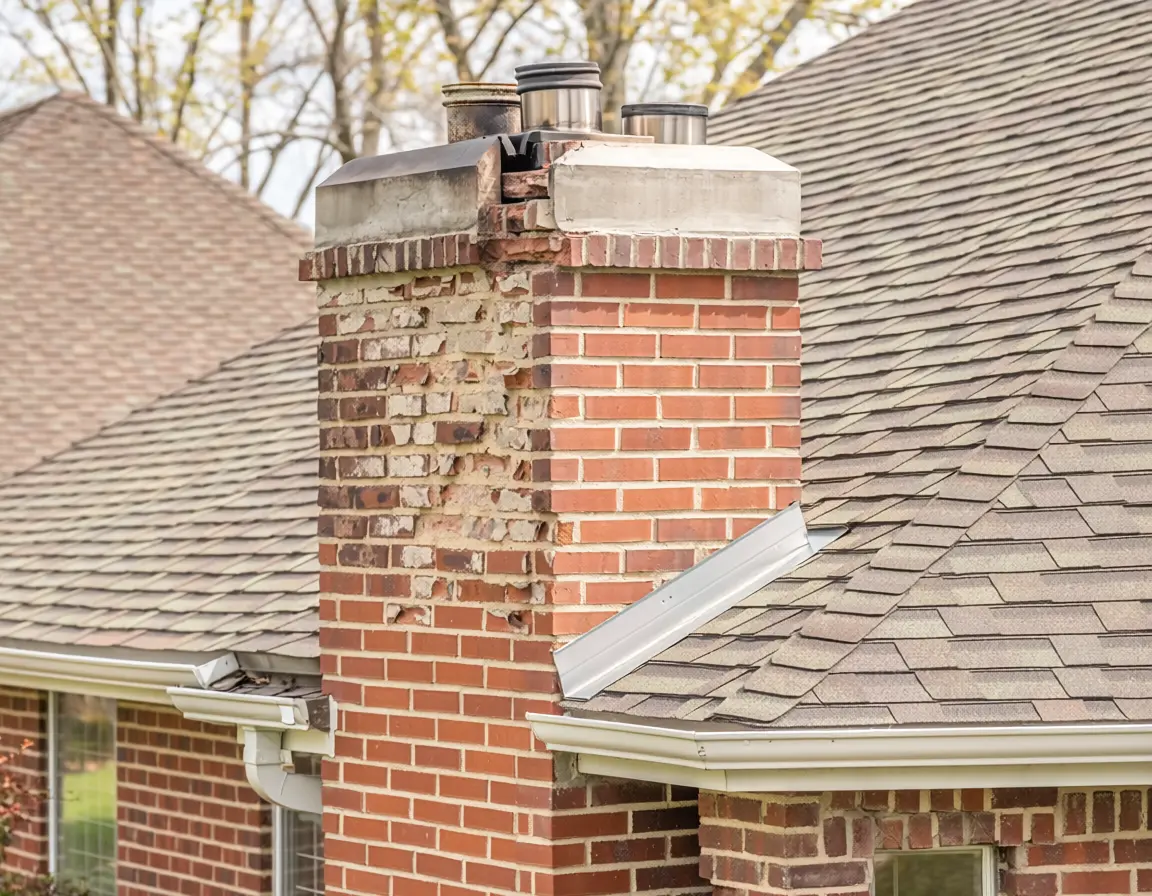
Chimneys are part of a home's masonry system and often show damage earlier than lower walls. Cracked crowns, deteriorated mortar, and loose bricks can allow water into the chimney and nearby interior areas.
Including the chimney in a residential masonry inspection helps homeowners find problems that may be difficult to see from the ground.

Why Matching Materials Matters
Residential masonry repair should blend with the existing home. Using the wrong brick size, color, texture, or mortar can make repaired areas stand out.
More importantly, incompatible mortar may be too strong or too weak for the original brick. Proper material selection helps the repaired section perform correctly while maintaining the home's appearance.
How Residential Masonry Protects Property Value
Well-maintained brickwork shows that a home has been properly cared for. Repairs can improve the appearance of exterior walls, porches, steps, and chimneys while correcting issues that may concern future buyers.
Masonry maintenance can also help prevent water intrusion and structural deterioration. Repairing a small damaged section today may reduce the chance of needing a more extensive rebuild later.
Residential Masonry Services in Metro Detroit
Lonik Contracting provides residential brick repair, tuckpointing, chimney repair, porch restoration, brick pavers, and concrete flatwork throughout Metro Detroit and Southeast Michigan.
Whether your property has loose bricks, failing mortar, damaged steps, or aging exterior masonry, a professional inspection can help determine the right repair. Get a free estimate today.