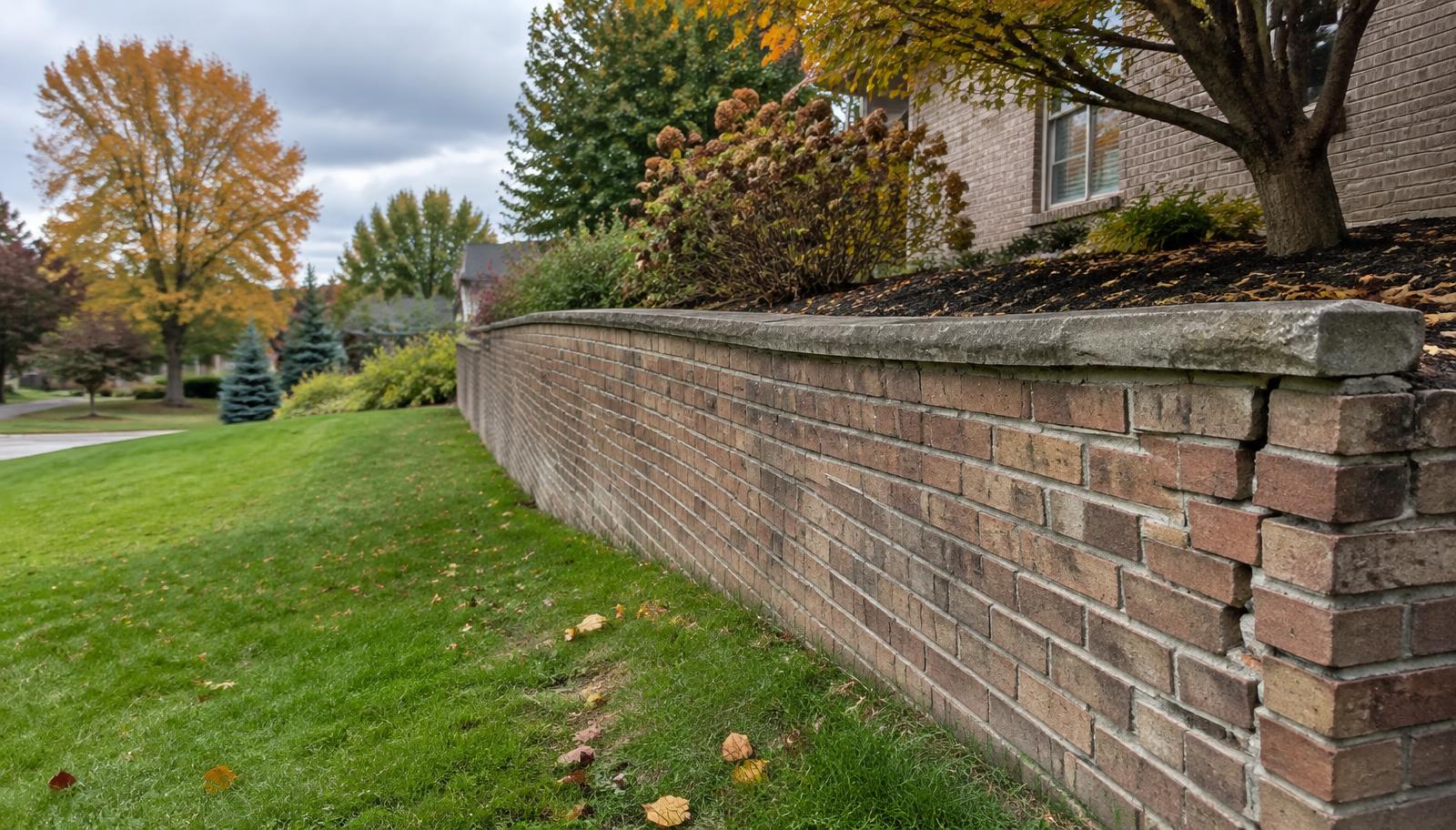
A retaining wall has a practical job: hold back soil and manage changes in elevation around a property. When it begins leaning, cracking, or separating, the problem is usually more than cosmetic. Pressure from soil and water can continue building behind the wall until larger sections shift.
For homeowners in Metro Detroit and Southeast Michigan, knowing the early signs of retaining wall trouble can help prevent damage to landscaping, walkways, driveways, and nearby structures.
Why Do Retaining Walls Begin to Fail?
Retaining walls constantly resist lateral pressure from the soil behind them. That pressure increases when water cannot drain properly. Saturated soil becomes heavier, and freezing temperatures can add even more stress during Michigan winters.
Other common causes include inadequate footings, settlement, tree roots, aging mortar, and walls that were not originally designed for the amount of soil they are holding back.
Warning Signs to Watch For
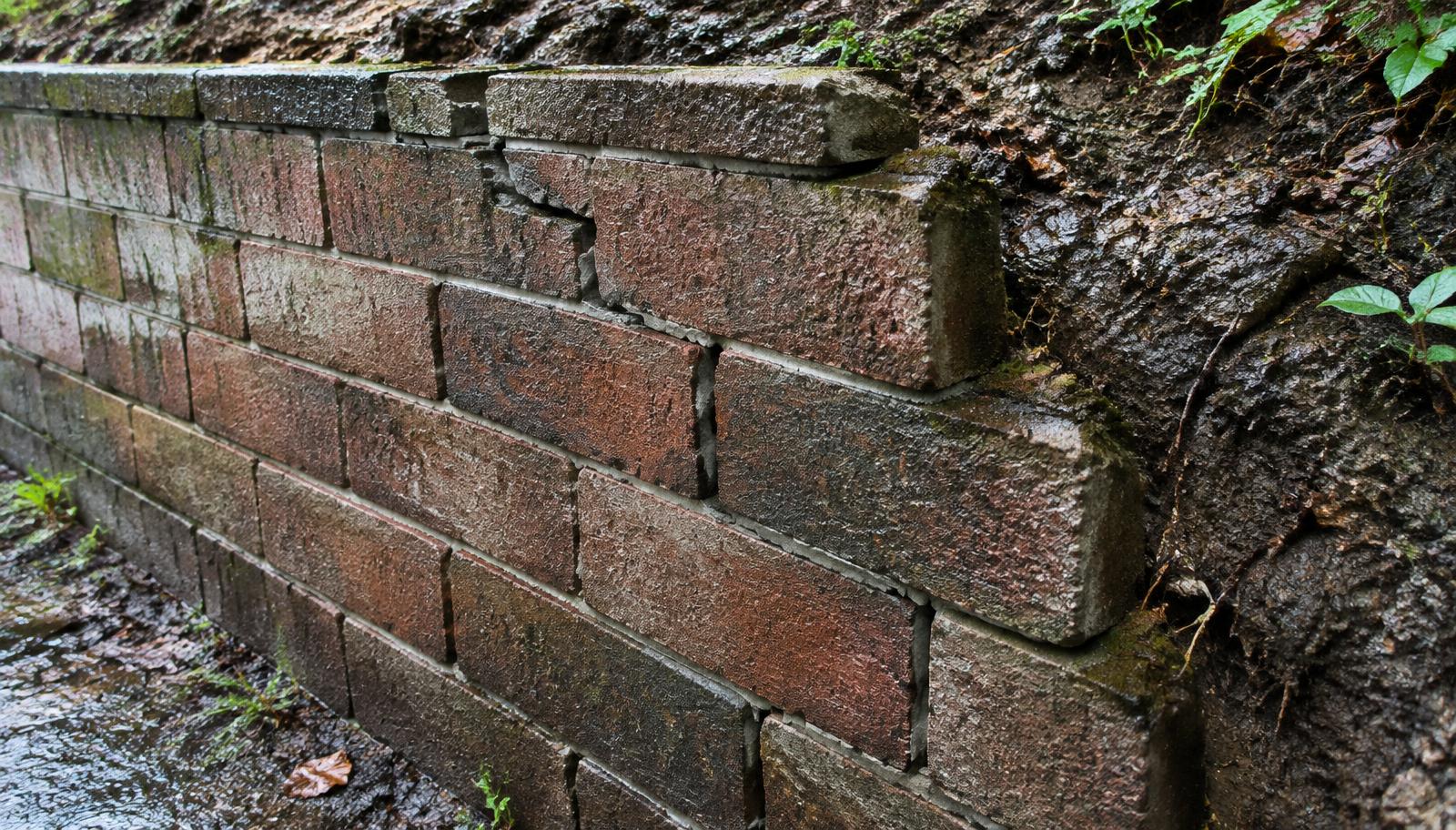
A slight lean may be easy to ignore, but visible movement is an important warning sign. Property owners should also watch for stair-step cracking, bulging sections, separated caps, loose bricks or stones, washed-out soil, and water collecting behind or near the wall.
If a wall is located beside a driveway, patio, walkway, or neighboring property, movement should be evaluated sooner rather than later because failure may affect more than the wall itself.
Drainage Is Part of the Masonry Solution
Repairing visible cracks without addressing water pressure can lead to repeated problems. A properly functioning retaining wall needs a way to move water away from the soil behind it.
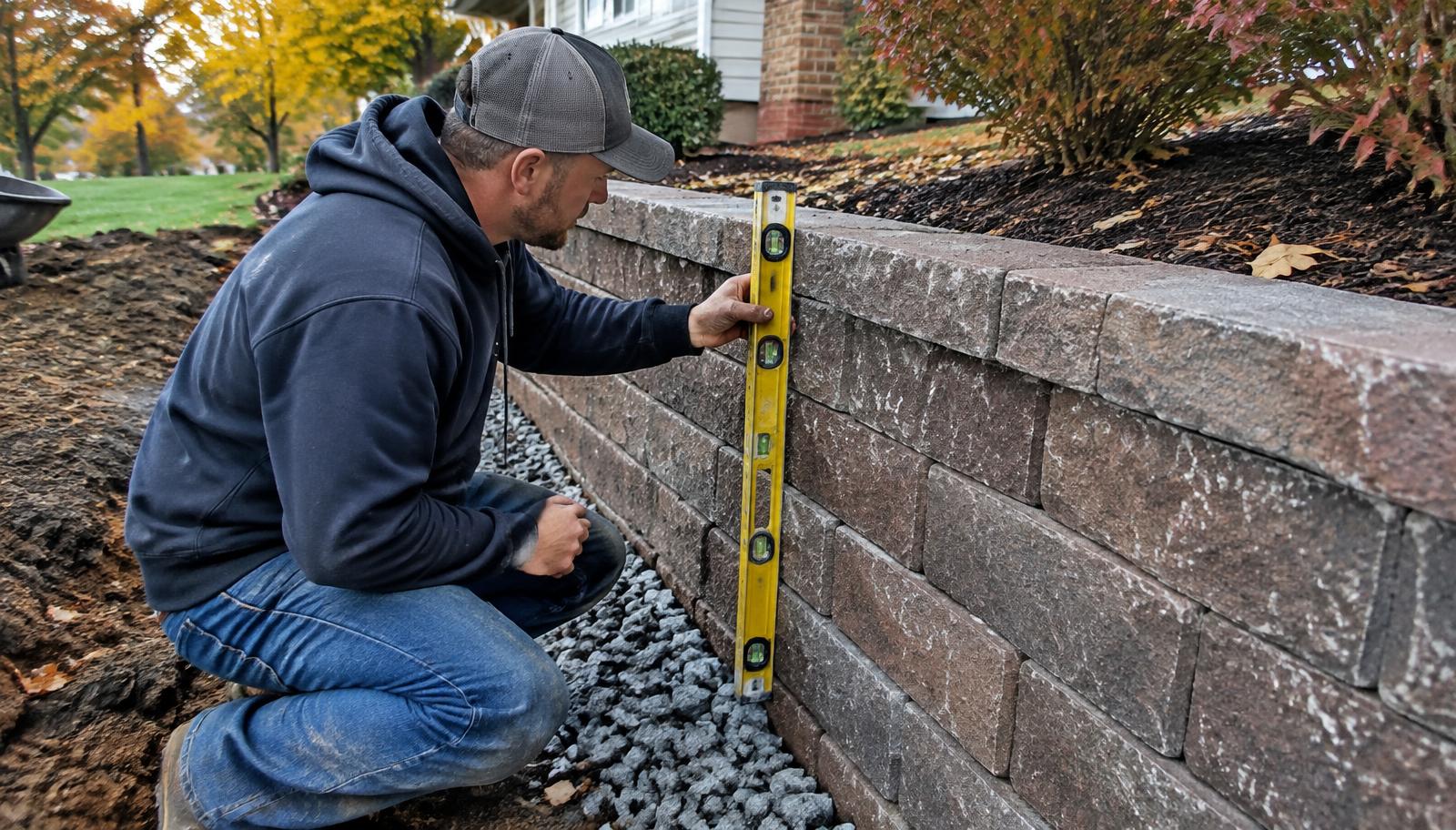
Depending on the wall and site, that may involve drainage stone, weep paths, grading improvements, or other measures that reduce hydrostatic pressure. The goal is to repair the masonry while also reducing the forces that caused the damage.
Repair, Rebuild, or Replace?
Minor mortar deterioration or isolated damage may be repairable. Sections with significant leaning, bulging, or foundation movement may need partial or full rebuilding.
An experienced masonry contractor can assess the condition of the wall, surrounding grade, and drainage to determine whether targeted repair will provide a durable result or whether reconstruction is the better investment.
Retaining Walls Built for Southeast Michigan Conditions
Lonik Contracting provides brick and stone retaining wall services throughout Metro Detroit and Southeast Michigan. Local experience matters because retaining walls in this region must handle seasonal rain, snow, soil movement, and freeze-thaw conditions.
If your retaining wall is leaning, cracking, or allowing soil to wash out, an inspection can help identify the cause before the damage spreads.
Frequently Asked Questions
Is a leaning retaining wall dangerous?
A leaning wall can indicate that soil or water pressure is exceeding what the structure can resist. The severity depends on the amount of movement, wall height, and what is located nearby.
Can drainage cause a retaining wall to crack?
Yes. Water trapped behind a wall adds pressure and can contribute to cracking, bulging, and movement, especially during freeze-thaw cycles.
Can part of a retaining wall be rebuilt?
In some cases, yes. If damage is concentrated in one area and the remaining structure is sound, a contractor may be able to rebuild the affected section.
Not sure what your masonry needs? Lonik Contracting provides free estimates for homes and businesses across Metro Detroit and Southeast Michigan.