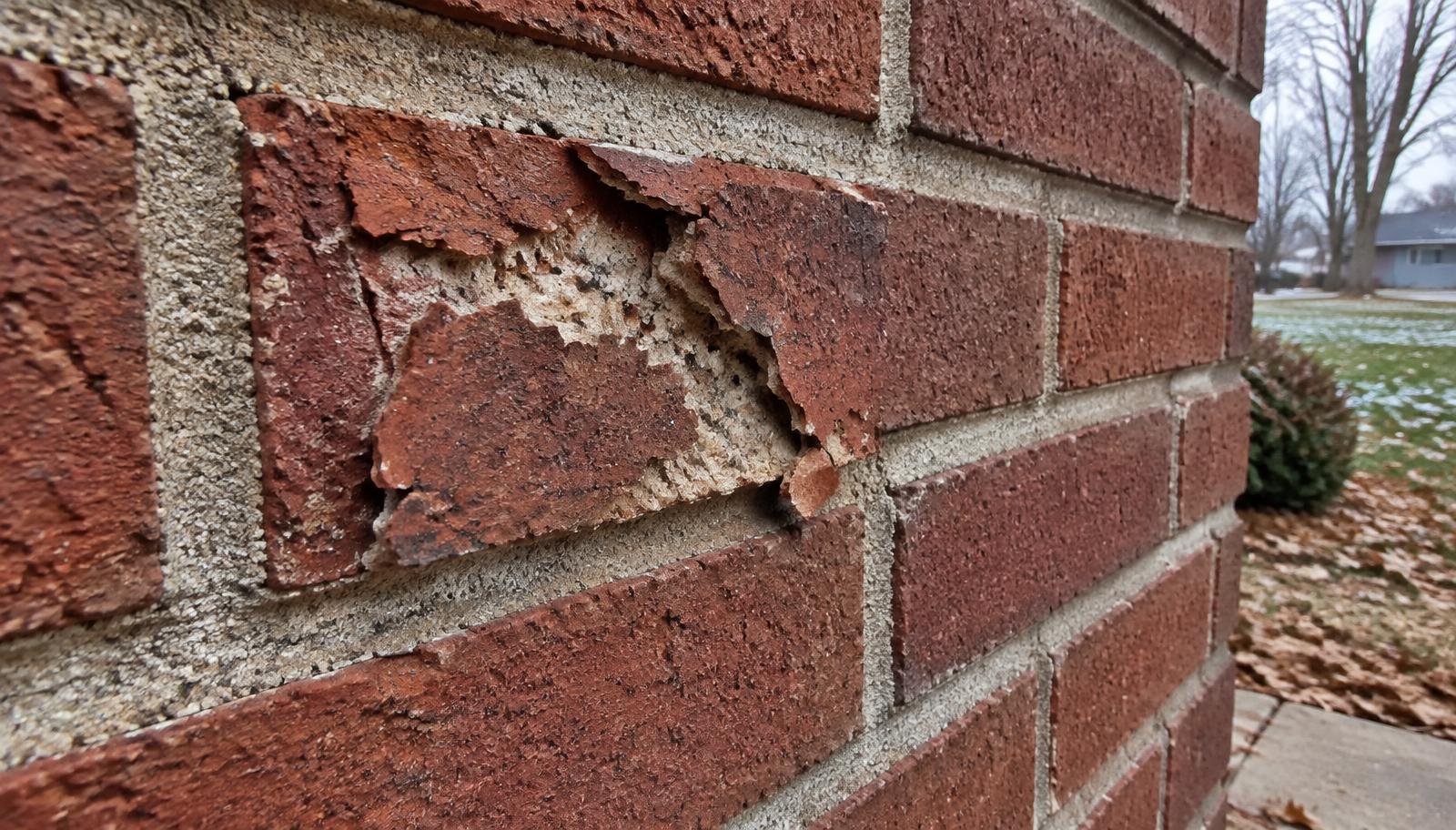
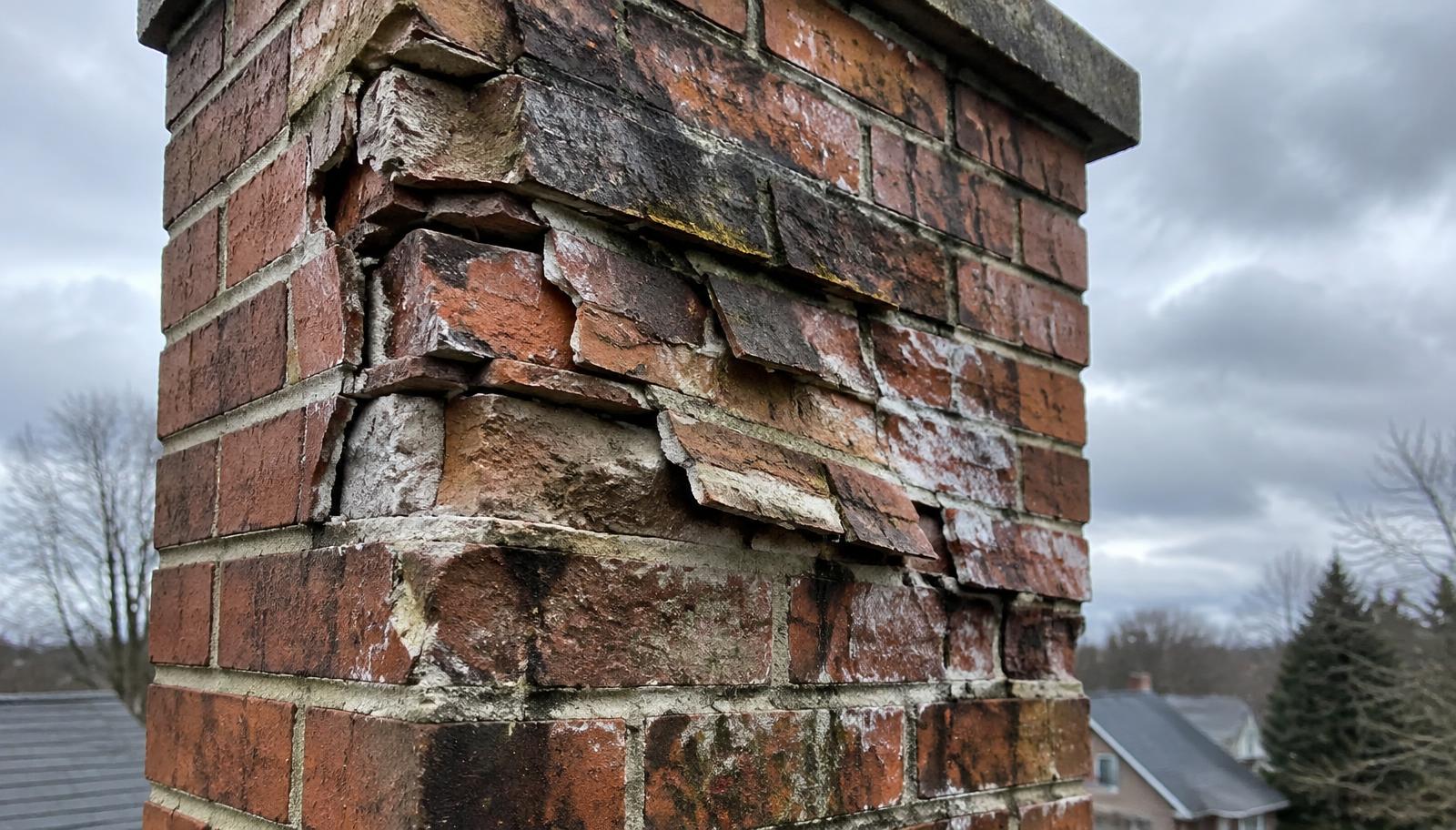
If the face of a brick is flaking, peeling, or breaking away in layers, the problem is known as spalling. It is especially common in climates where masonry is exposed to moisture and repeated freezing temperatures.
Spalling should not be treated as a simple appearance problem. Once the protective face of the brick has deteriorated, the remaining material can absorb more moisture and continue breaking down.
What Causes Brick to Spall?
Moisture is one of the main contributors. Brick naturally absorbs some water, but excessive moisture or water trapped within the masonry can become damaging when temperatures fall below freezing.
Improper mortar, failed drainage, damaged chimney crowns, leaking gutters, splashback near grade, and previous coatings that trap moisture may also contribute to deterioration.
What Does Spalling Look Like?
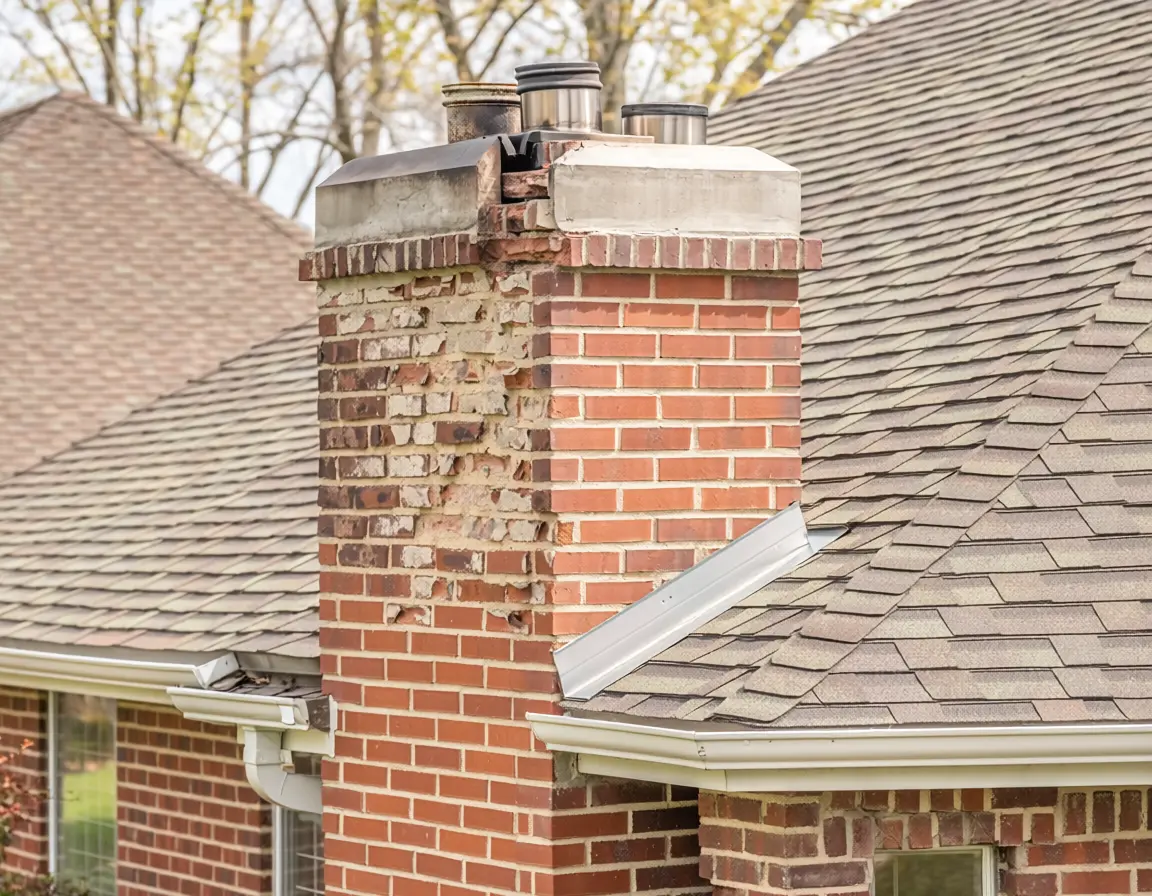
Early spalling may appear as small chips or thin flakes coming off the face of a brick. More advanced damage can expose the softer interior, create deep pits, or cause corners and entire brick faces to break away.
Homeowners often notice the problem first on chimneys, porches, lower walls, steps, or elevations that receive frequent rain and snow.
Can Spalled Brick Be Repaired?
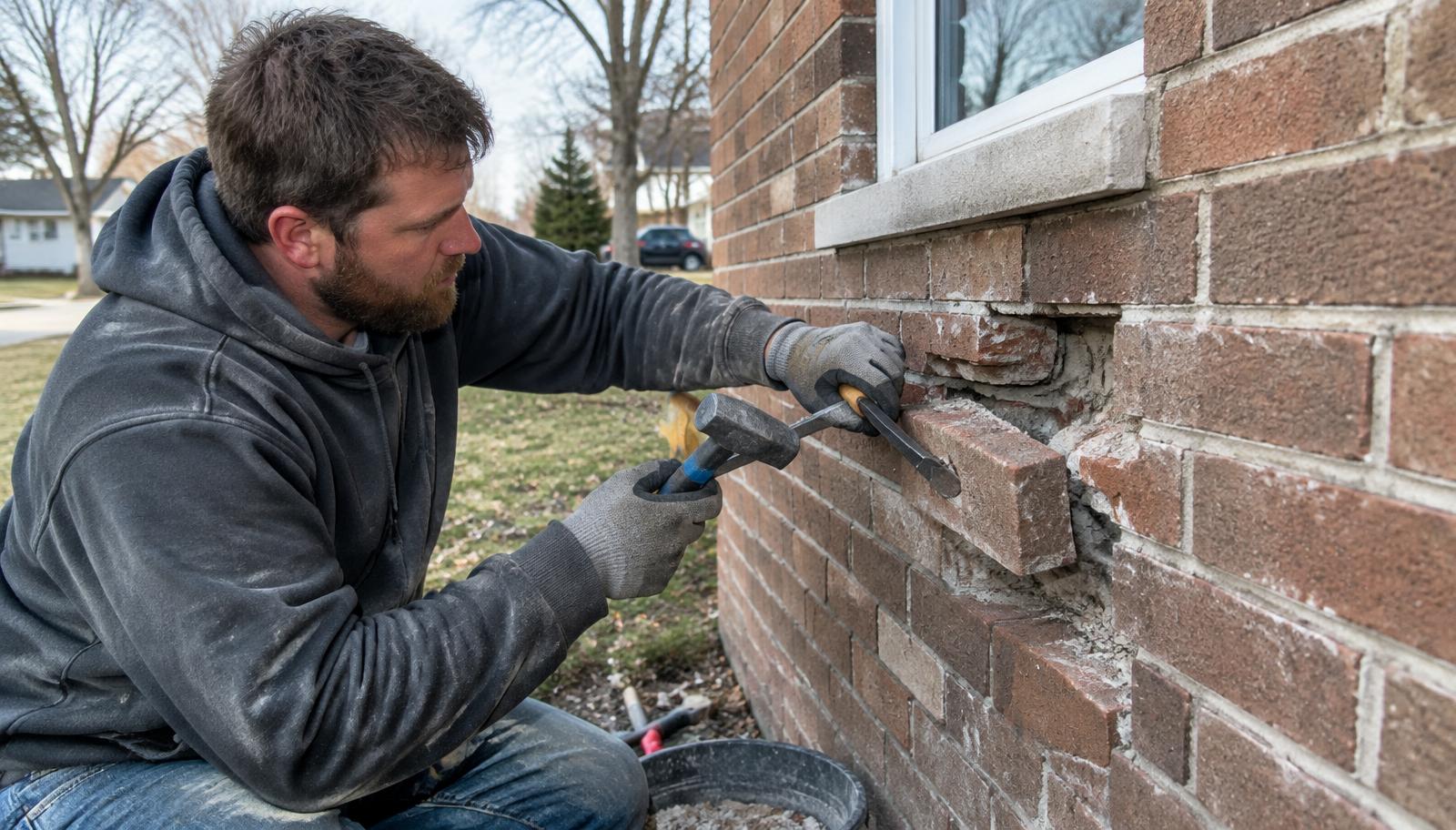
A brick that has lost a significant portion of its face usually cannot be restored with mortar alone. Severely damaged units are typically removed and replaced with compatible brick.
At the same time, the surrounding mortar and source of moisture should be evaluated. Replacing the brick without correcting ongoing water exposure may allow the same problem to develop again.
Why Material Compatibility Matters
Replacement brick should be selected with attention to size, color, texture, and performance. Mortar should also be compatible with the masonry rather than simply chosen for maximum hardness.
A well-planned repair protects the wall while helping the new work blend into the existing home.
Spalling Brick Repair in Southeast Michigan
Homes across Metro Detroit and Southeast Michigan regularly experience moisture, snow, and freeze-thaw conditions that can accelerate masonry wear. Checking vulnerable brickwork before and after winter can help homeowners catch deterioration earlier.
Lonik Contracting provides brick replacement, tuckpointing, chimney repair, porch repair, and masonry restoration for homes throughout Oakland, Wayne, and Macomb County communities.
Frequently Asked Questions
Is spalling brick a structural problem?
It can become one if deterioration spreads or affects a significant portion of a wall, chimney, or support. Even isolated spalling should be evaluated because it often points to ongoing moisture exposure.
Can I seal spalling brick instead of replacing it?
Sealer does not rebuild material that has already broken away. The damaged brick and the source of moisture should be assessed before deciding on treatment.
Why does brick spalling get worse in winter?
Water absorbed into masonry can freeze and expand. Repeated freeze-thaw cycles can loosen additional material and enlarge existing damage.
Not sure what your masonry needs? Lonik Contracting provides free estimates for homes and businesses across Metro Detroit and Southeast Michigan.